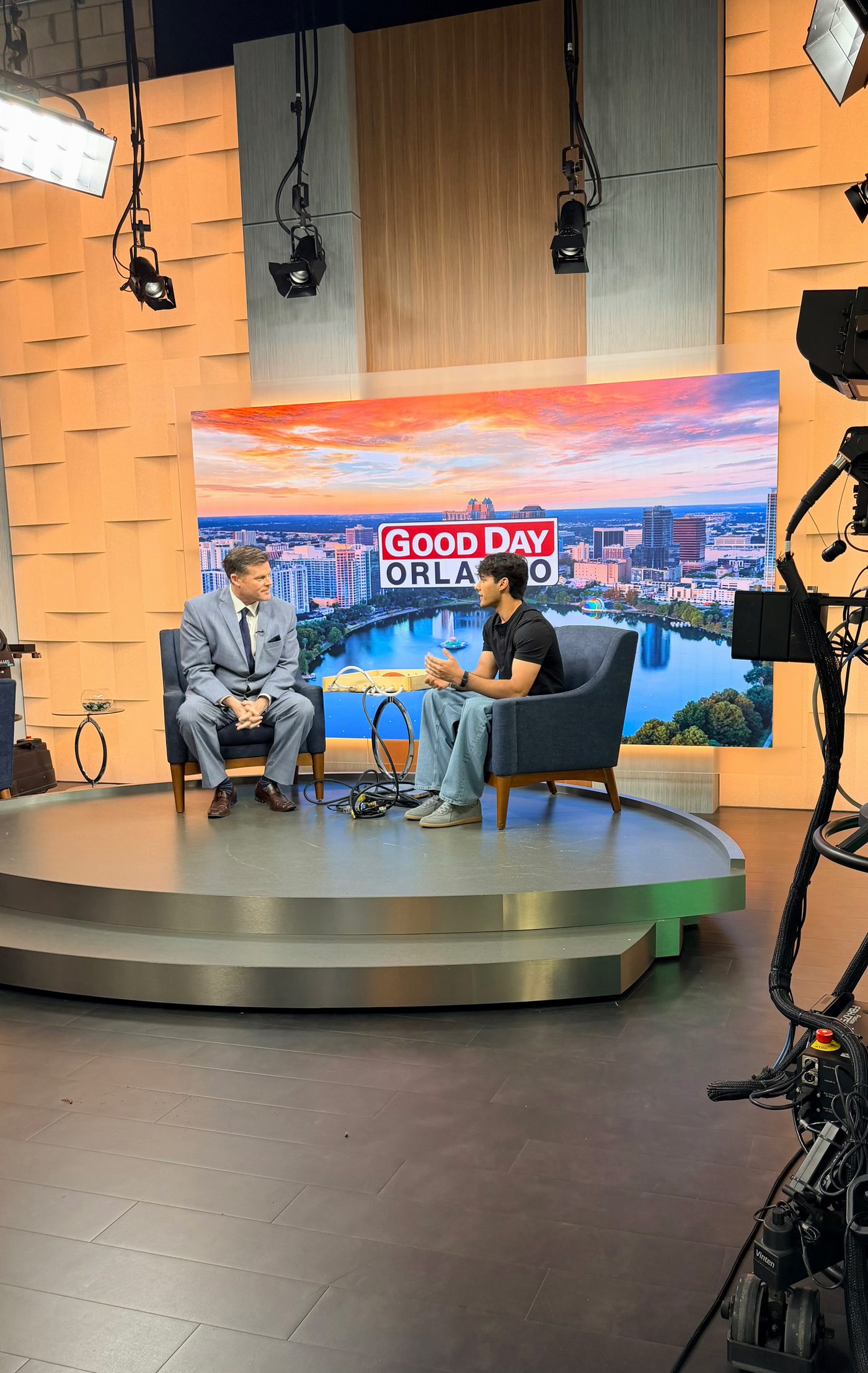
When I was in the 5th grade I visited a local beekeeper's apiary, and when he opened his hives, a lot of them were empty. I asked why, and he told me it was because of the Varroa mite, a parasite that has been collapsing colonies around the world. I went back home and started researching the mite, and by 7th grade that led to running my own experiments on how to stop it. I've spent every year since building and field-testing treatments.
The bees introduced me to my second mission. Many of the beekeepers I worked with turned out to be military veterans, and one of them told me the hives were the best therapy he'd found: the calm, the routine, the reason to suit up in the morning, and how it quieted symptoms like PTSD, loneliness, and depression. That sent me into veteran mental health research, studying what actually protects the people carrying those weights.
I also became interested in Florida's harmful algal blooms after seeing them all over the news, closing the coastlines near my hometown of Orlando, Florida. So I began studying whether satellites can see them coming before people and fisheries pay the price. Three problems, one mission: turn field research into tools that measurably improve the lives of others.